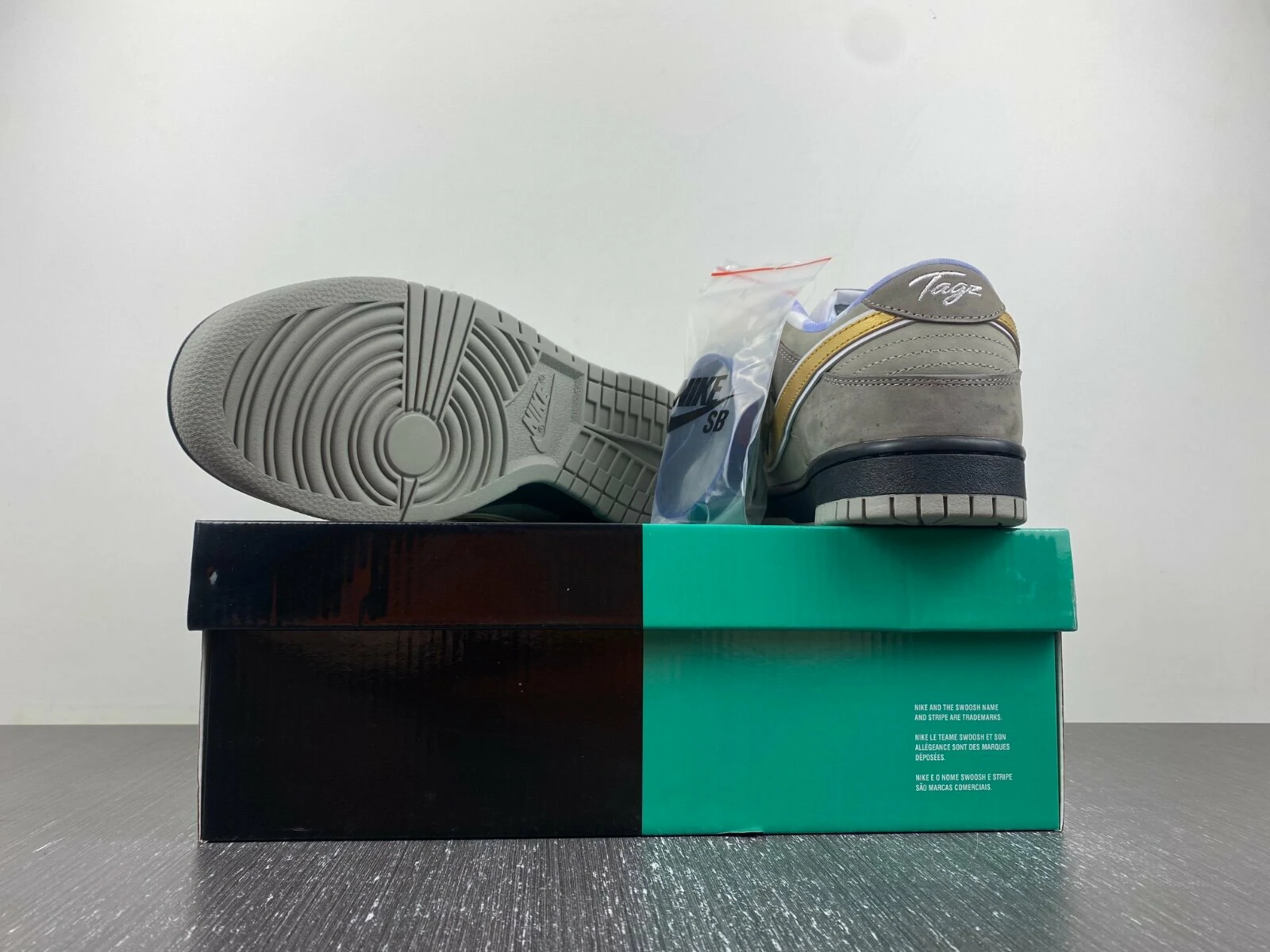
The box will not make or break a pair on its own, but on this release it moves real money. Buyers who treat the nike sb dunk low ben & jerrys chunky dunky box as an afterthought end up holding pairs that sit on the shelf, because collectors ask About the label, the lid art, and the inserts before they talk price.
Below is what actually ships in the retail packaging, how to grade a box in about five minutes at the receiving table, and how packaging changes what a pair is worth to a US shop. Everything here is a check you can run yourself before money changes hands.
What Actually Ships in the Retail Packaging
Two packaging versions circulate. One is a special-edition box built around the Ben & Jerry's theme, with the tie-dye and carton artwork carried onto the lid and the sides. The other is the standard Nike SB box used across the line that year.
Legitimate pairs have appeared in both, so a plain box is not proof of anything by itself. What you want is internal consistency: the box label, the size tag inside the shoe, and the shoe itself should all describe the same pair, produced in the same window.
Inside, expect the usual SB extras: paper wrap and the insert that keeps the collar from crushing. Missing inserts are common on used pairs and worth noting in your listing rather than hiding.
Why the Box Changes What a Pair Is Worth
Retail buyers pay for presentation. A complete pair with a clean box photographs better, ships safer, and answers the first question an online buyer asks: is this a full set or just the shoes? That answer sets your asking price more than most sellers expect.
For a nike sb dunk low ben & jerrys chunky dunky box in clean shape, the set usually sells faster and holds a wider margin than the same pair without packaging. Treat the gap as a range, not a rule. It swings with size, Condition, and the season, so confirm current sold comps before you set a retail number.
There is also an authentication angle. A well-made box with a correct label supports a legitimate pair. A sloppy box with a mismatched label is a reason to walk away, even when the shoes look right at first glance.
A Five-Minute Box Check Before You Pay
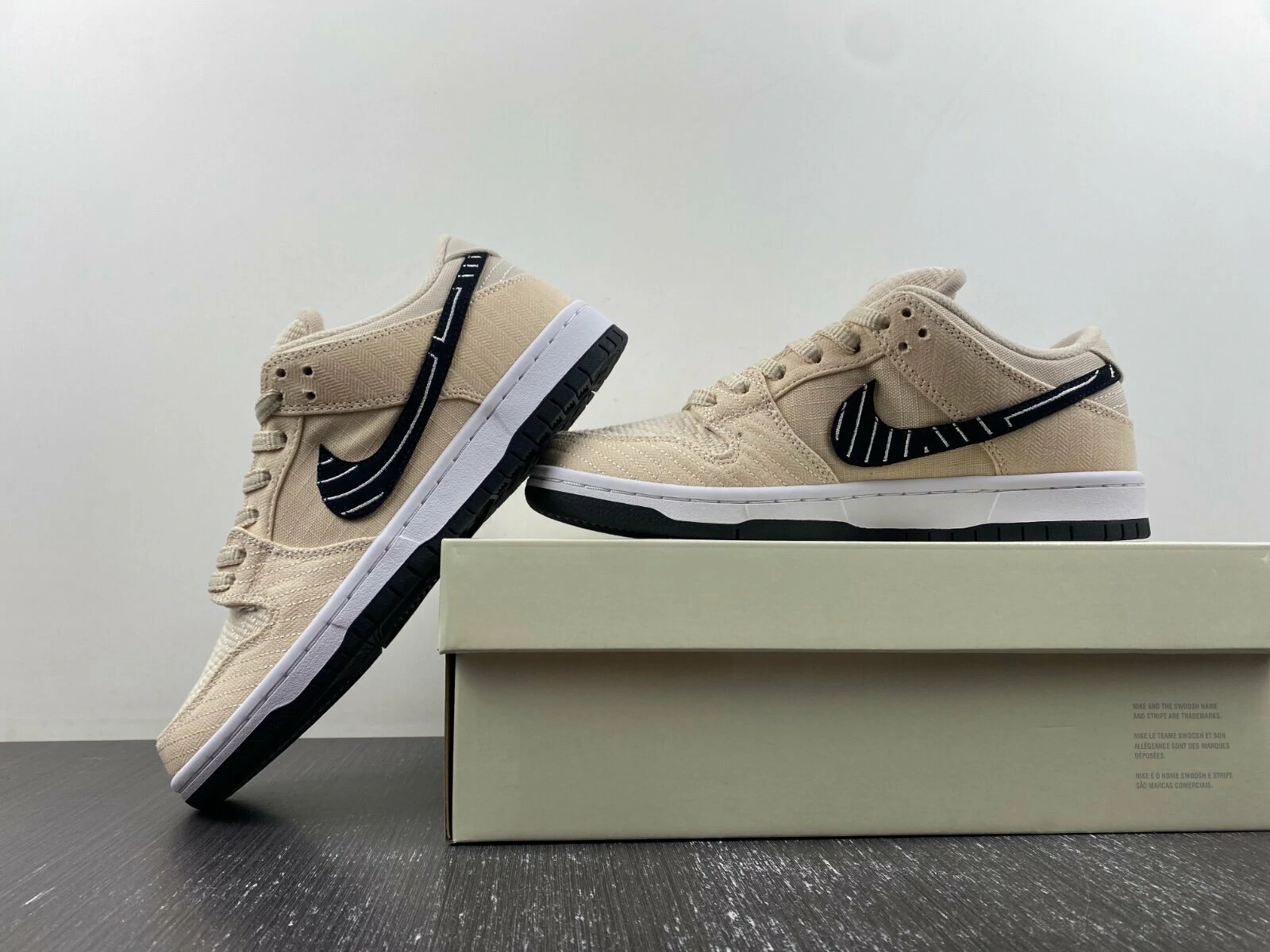
Run this sequence on any nike sb dunk low ben & jerrys chunky dunky box you are offered, whether it is a single pair or part of a larger lot. It will not replace professional authentication, but it filters the obvious problems before you tie up cash.
- Match the label to the shoe. Size, style code, and colorway text on the label should agree with the tag inside the shoe and with the pair in your hands.
- Read the print. Lettering on an authentic label is even and sharp. Blurred type, heavy ink, or text sitting off-center is a warning sign.
- Scan the barcode. A UPC that returns a different product, or nothing at all, needs an explanation before you buy.
- Inspect the lid artwork. Graphics and tie-dye panels should be crisp with clean color edges. Pixelation, banding, and washed-out color usually mean a reprint.
- Flex the walls. Real boxes are rigid. A lid that bows easily points to thin board and, often, a fake.
- Check corners and nesting. Crushed corners knock a grade down, and a lid that will not sit flat suggests bad storage or a swapped box.
- Compare to stock you trust. Keep one known-good box in the back room as a reference for board thickness and label placement.
If two or three of these checks fail, the safe move is to pass or to price the pair as no-box. When a deal is large enough to matter, send photos to a professional authentication service and let them carry the risk.
Grading Boxes for Store Inventory
Grade every box on arrival and write the grade on the intake sheet. That single habit keeps your listings honest and stops a damaged box from quietly dragging down a premium pair. An incoming nike sb dunk low ben & jerrys chunky dunky box should be graded the same day it lands.
| Grade | What you will see | How to list it | Typical price effect |
|---|---|---|---|
| A | Sharp corners, flat lid, clean label, no scuffs | Complete in original box | Full market range |
| B | Light shelf wear, small scuff on one edge | Complete, minor box wear | Slight discount, often negotiable |
| C | Crushed corner, peeling print, torn label | Complete, box damaged | Noticeable discount, damage must be photographed |
| D | No lid, wrong box, or label mismatch | Shoes only, no box | Largest discount, priced on shoe condition |
Numbers vary by size and platform, so use this as a framework for internal decisions rather than a published price list. Update the effect column with your own sold data every quarter.
One more rule worth writing into your intake process: never relabel a box to match a pair. Swapping lids or printing a fresh label turns a small margin problem into a credibility problem you cannot fix.
Handling No-Box and Box-Only Deals
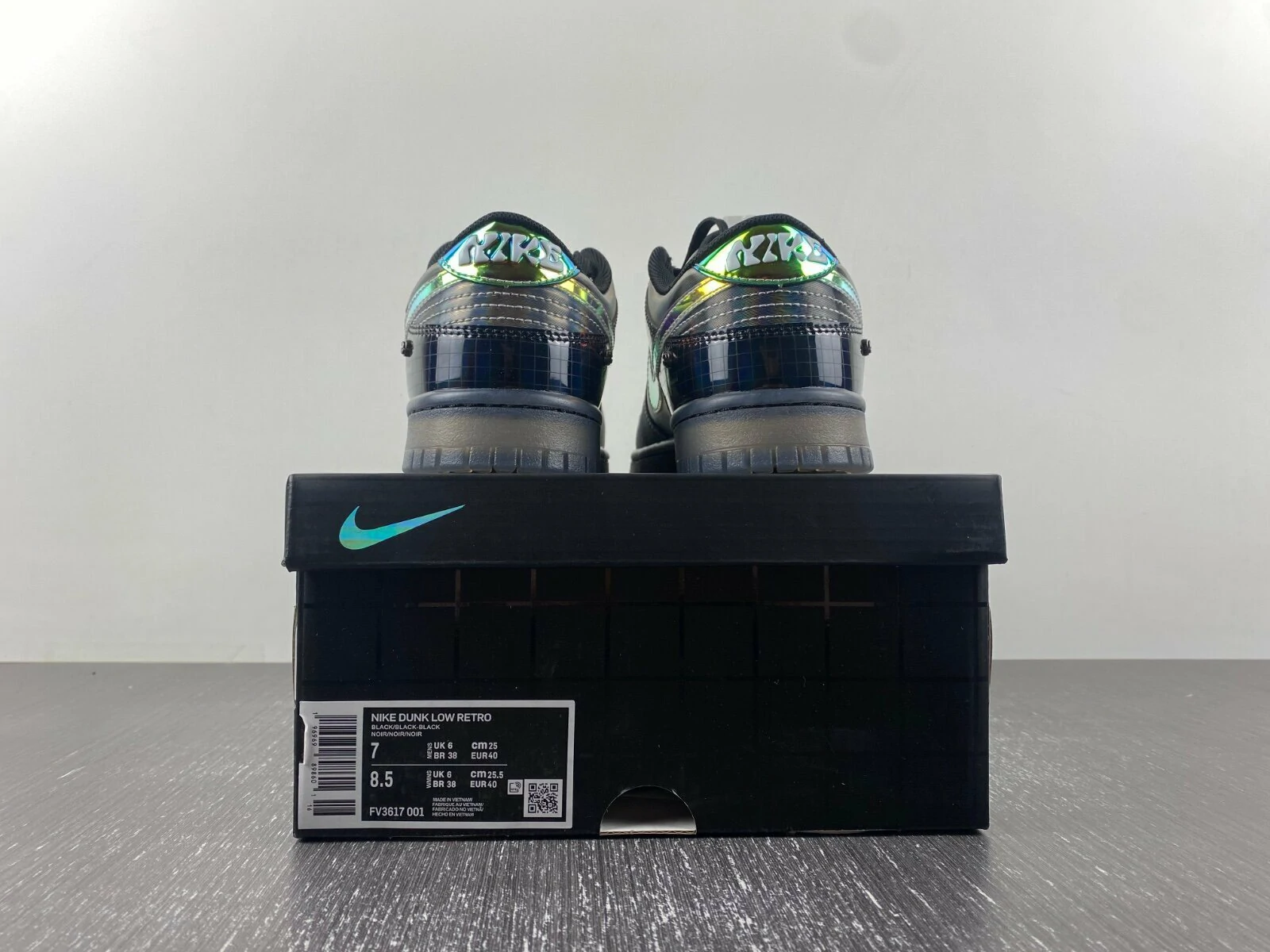
No-box pairs are the backbone of volume for many shops. They move at lower prices, appeal to wearers instead of collectors, and carry less authentication anxiety for buyers who plan to wear them.
Photograph the shoes thoroughly, disclose the missing packaging in the title, and price against sold comps for shoe-only listings. Buyers reward honesty with fewer returns and cleaner reviews.
Box-only sales exist too, usually from collectors repairing a set. If you buy packaging separately, treat it as a display item, check the label against the pair you plan to pair it with, and disclose that the box was sourced on its own. Do not present a mismatched set as original.
Frequently Asked Questions
Did the Chunky Dunky come with a special box?
Some pairs shipped in special-edition Ben & Jerry's themed packaging, and others shipped in the standard Nike SB box. Both appear on legitimate pairs, so judge the whole set (label, shoe tag, materials) instead of the box alone, and confirm details with an authenticator when the amount at stake is high.
How much does a missing box hurt resale?
It depends on the buyer. Wearers rarely care. Collectors do, and they discount accordingly. Price the pair against shoe-only comps, disclose the gap clearly, and expect a wider spread on larger sizes where collector demand is thinner.
Can I buy just the box to complete a pair?
Yes, aftermarket packaging shows up regularly. Check the label against your pair's size and style code, expect some storage wear, and never describe a separately sourced box as the original one. Buyers ask directly, so have an answer ready.
Does a correct label prove the shoes are authentic?
No. Labels can be copied and boxes can be swapped. A clean label raises confidence but proves nothing on its own. Use stitching, materials, midsole finish, and a professional authentication service for anything expensive.
What should I check when buying boxed pairs in bulk?
Spot-check several labels per lot against the shoes, confirm the sizes match the packing list, and grade the boxes before you agree on a final number. Condition standards and lot terms vary widely, so confirm both with your supplier in writing.
Ready to compare lots? Send your size breakdown and target grade, and ask for current photos of the label and lid on every pair in the offer. A supplier who answers that request quickly is usually the one worth keeping.