There is no shoe officially named the Air Jordan Cat. When shoppers type air jordan cat into a search bar, they are almost always hunting for a Black Cat Air Jordan, the all-black colorways tied to Michael Jordan's old nickname. This guide covers which models carry that nickname, how the pairs fit, what to inspect before buying in quantity, and where wholesale sourcing usually goes wrong.
Treat the phrase as a buying signal rather than a product name. A customer who searches it is usually ready to commit to an all-black retro, and they often do not know the model number. That gap is your opening to qualify the sale, offer an alternative, or move them into a size you actually have in stock.
What the Search Phrase Usually Means
Michael Jordan picked up the Black Cat nickname early in his career, and Jordan Brand has reused it for near-monochrome releases across several retros. The pairs US shops get asked for most are the Air Jordan 4, the Air Jordan 13, the Air Jordan 3, and occasionally the Air Jordan 6. Release timing and regional availability shift from year to year, so never quote a production year to a customer from memory.
Here is the harder part. Nicknames are marketing shorthand, not inventory identifiers. Two pairs sold under the same nickname can differ in upper material, midsole finish, and even the shade of black. When a buyer asks for air jordan cat, confirm the model number and style code before you promise a delivery date.
| Model | What buyers usually mean | Typical size request | Stocking note |
|---|---|---|---|
| Air Jordan 4 | All-black nubuck retro | Men's 9 to 12 | Fastest turnover, hardest to restock |
| Air Jordan 13 | Blacked-out retro with hologram detail | Men's 10 to 13 | Steady demand, very size-sensitive |
| Air Jordan 3 | Black base with elephant print | Mixed men's and GS | Strong family selling, buy full runs |
| Air Jordan 6 | Blacked-out retro | Men's 8 to 11 | Smaller runs, watch dead stock |
Which Black Cat Models Actually Move
All-black retros sell to two groups: collectors finishing a set and casual buyers who want something that hides wear. Both groups care about the same thing, which is how the finish holds up after a month of daily use. Nubuck and suede pairs scuff visibly and flatten at the toe, so expect care questions at the counter.
Size runs matter more than raw volume here. A tight, complete run of a Black Cat 4 will outsell three times the units of a mixed assortment nobody asked for. If your open-to-buy is limited, go deep in men's 9 to 11 and stay light at the extremes.
Fit and Sizing Notes to Pass Along
Most Air Jordan retros run close to true to size in US men's sizing, but the 4 and the 13 fit differently enough that customers notice. Wide-footed buyers often go up a half size in the 4, while the 13 runs a touch long for some wearers.
- Pull the current official brand size chart before quoting any conversion.
- Women buying men's pairs typically size down about 1.5 in US sizing.
- Grade school pairs top out at a different size than men's, so read the label.
- Ask what shoe the customer wears now, not what their "normal" size is.
- Mention that black uppers crease faster at the toe box, which affects resale.
Keep this list at the register and in your product descriptions. Fit-related returns cost more than the extra minute of conversation, especially on final-sale retro drops.
Authentication Checks Before You Buy in Bulk
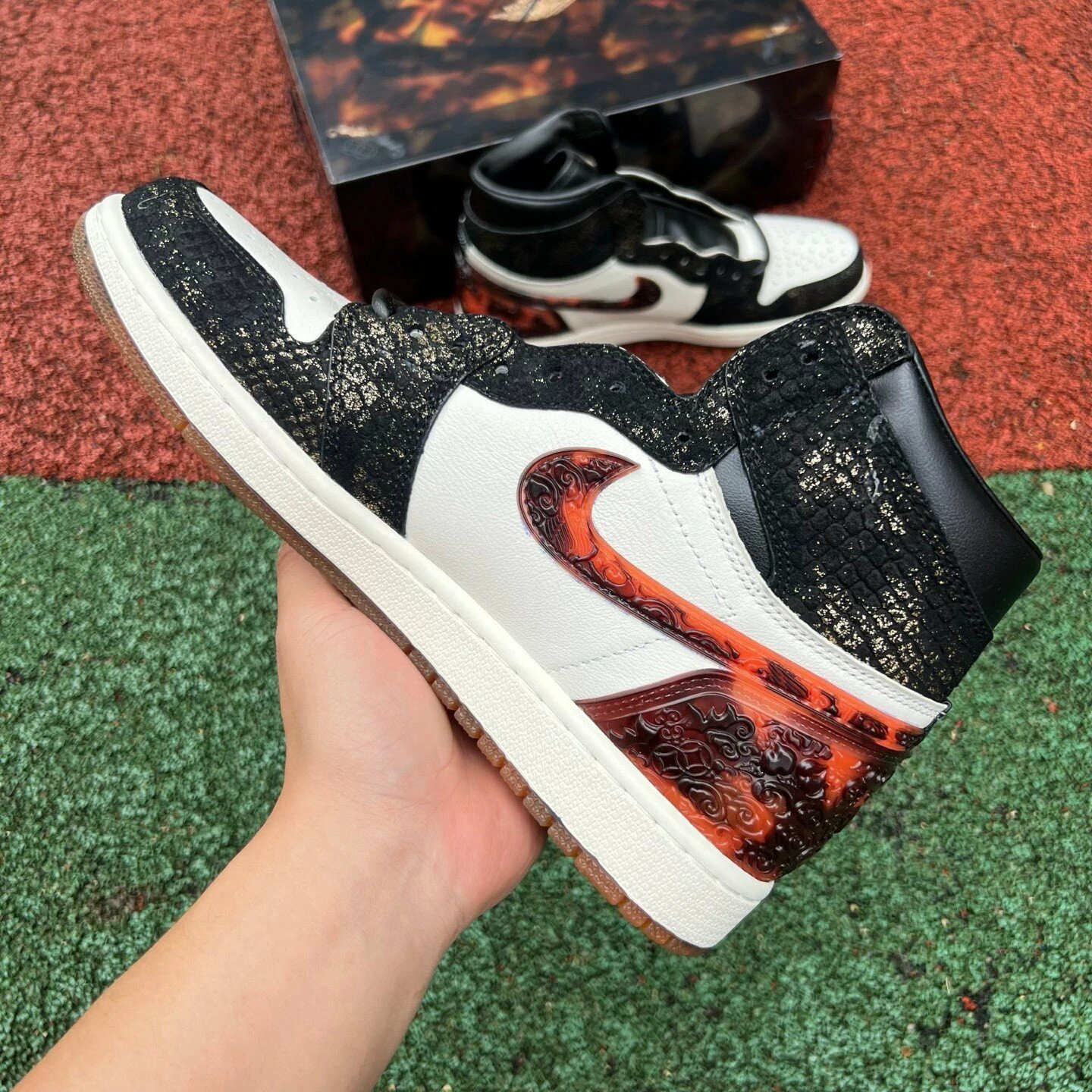
Replica pairs are common on this colorway because solid black hides construction errors. You have to look harder, not less hard. Start with the size tag inside the collar and match the style code against the box label.
- Style code and production dates on the inner tag should match the box label exactly.
- Check stitch density along the toe and heel; uneven spacing is a red flag.
- Compare midsole paint lines on both shoes. Sloppy overlap usually means a fake.
- Weigh the pair. Boxes and shoes that feel light deserve a second look.
- Require dated photos of the actual pairs, never stock images or catalog renders.
- Send high-value lots to a professional authentication service before listing.
Sellers who push back on photos or paperwork are telling you something useful. When a bulk lot is described as air jordan cat with no model numbers listed, treat that as a documentation gap rather than a bargain.
Sourcing Realities for US Store Owners
Authorized wholesale is the cleanest path, but allocation on retro Jordans is limited and usually tied to existing account history. Most independent shops fill the gap through licensed distributors, secondary-market bulk buys, or liquidation lots. Each channel carries a different risk profile and a different paper trail.
Expect quoted minimums to swing widely by channel, from single pairs on the secondary market to full pallets on liquidation. Ask for the MOQ in writing, along with case pack sizes and the defect return policy. Ranges you hear on a call are indicative only, so confirm everything on paper before you wire anything.
Landed cost is where margins quietly disappear. Freight, duties, and broker fees can add a meaningful percentage to your unit cost, and the rate depends on classification and country of origin. Work with a customs broker on the paperwork instead of guessing. Plenty of buyers searching air jordan cat for the first time underestimate this step and price their pairs too low.
- Ask for a business license and resale certificate up front.
- Request dated photos of the actual units, including the size tags.
- Buy a small sample lot before committing to a large order.
- Confirm the refund window for inauthentic or damaged goods.
- Get shipping terms in writing, including who pays duty and brokerage.
Pricing and Margin Basics
Retail prices on retro Jordans are set by the brand, so your margin comes from what you pay, not what you charge. A pair bought close to retail leaves almost nothing after payment fees and outbound shipping. Lots priced far below market usually carry a reason: mixed sizes, damaged boxes, or something worse.
Run your numbers on landed cost per pair rather than the headline lot price. Include payment processing, inbound freight, and the labor of photographing and listing each pair. If the deal only works at full retail, it does not work.
Frequently Asked Questions
Is there an actual Air Jordan Cat model?
No. Jordan Brand has never released a shoe under that exact name. The phrase is shopper shorthand for Black Cat colorways, most often the Air Jordan 4 and the Air Jordan 13. Ask the customer for a photo or a style code and you will land on the right pair in seconds.
Do Black Cat Jordans run true to size?
Generally yes in US men's sizing, with small variations by model. The Air Jordan 4 tends to feel snug for wide feet, and the 13 runs slightly long. Check the current official size chart each release, because lasts and materials change between production runs.
Are these colorways good inventory for a small shop?
They sell, but they are competitive to source. Buy deep in core men's sizes and keep the run tight. All-black pairs also show creases and dust quickly, so expect more care questions and a slightly higher return rate than lighter colorways.
How do I avoid fakes in a bulk lot?
Match style codes to box labels, inspect stitching and midsole paint, and insist on dated photos of the actual pairs. For expensive lots, pay a professional authentication service. If a seller refuses documentation, walk away, because another lot always shows up.
What should I ask a supplier before ordering?
Ask for landed cost per pair, MOQ, case pack breakdown, defect policy, and lead time in writing. A supplier who answers all five clearly is worth a second call. Vague answers on any of them usually predict a vague shipment.
If shoppers keep asking for air jordan cat pairs, start with a short list of vetted suppliers and a written quote rather than a phone estimate. Send your target models, size breakdown, and quantity, and ask for landed cost per pair. The suppliers who answer in specifics are the ones worth building a season around.