The Jordan 4 retro OG Bred is the black and cement version of the Air Jordan 4, built to original spec with Nike Air branding on the heel and Fire Red accents against a black upper. For an independent shop, it is one of the more forgiving silhouettes to carry: the colorway reads as a staple rather than a trend, and it sells to collectors and general footwear customers alike. What follows is a working buyer's view of the shoe, covering what the spec actually includes, how it fits, how to check pairs before you pay, and how to plan a size run that does not sit.
What Defines the OG Bred Spec
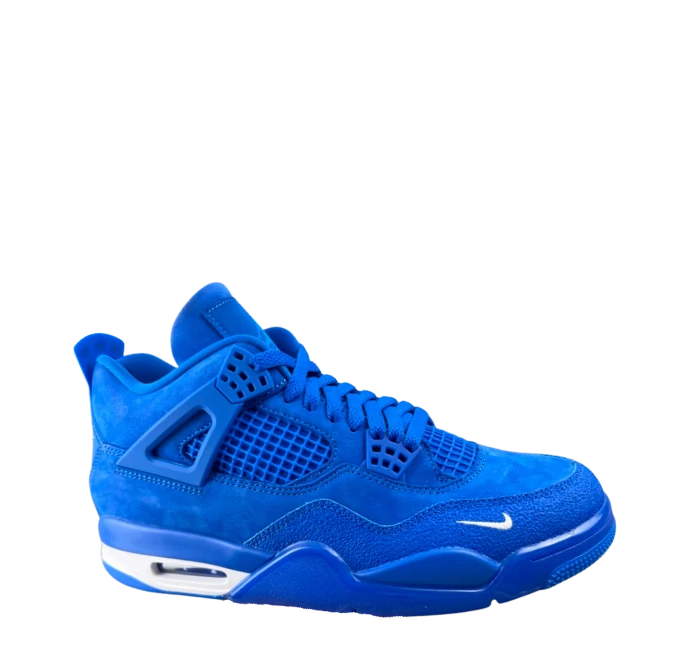
Start with the recipe. Black upper, Cement Grey panel accents, Fire Red detailing, white midsole, black rubber outsole, and visible Air in the heel. The heel tab is where the spec announces itself: original-spec retros carry the Nike Air wordmark, while other runs use the Jumpman. That single detail tells you which version a supplier is holding.
Retro years have not been identical. Some runs use a softer durabuck-style synthetic, others a flatter nubuck or a smoother leather. None of that is automatically wrong, but a supplier quoting "the Bred 4" without a style code is telling you they do not know which release they have. Anyone sourcing the Jordan 4 Retro OG Bred in quantity should treat the style code as the first filter, not the last one, and match the box label to the tag inside the shoe.
How the Build Holds Up in Rotation
Durabuck and nubuck hide creasing better than smooth leather, which matters for a shoe that gets worn hard. Scuffing is the bigger problem. Black uppers fade to grey at the toe box and heel counter, and once that happens the pair reads as used from three feet away.
Two wear points show up again and again. Midsole paint chipping along the lateral edge appears after a dozen or so wears, and the mesh netting on the quarter panel and tongue is the first thing to tear when a shoe is pulled on without unlacing. Check netting tension on any consignment or trade-in pair before you accept it.
For display stock, keep the pair out of direct sun and away from hot cases. Yellowed midsole and netting is the most common reason a display unit stops selling at full price, and it happens faster than most owners expect.
Sizing, Fit, and the Curve You Should Stock
Fit runs close to true for most buyers. The midfoot is snug, the toe box is average, and the shoe does not run long. Wide-footed customers usually go up a half size, and that is the question your counter staff will field most often on this model. Fit guidance for the Jordan 4 Retro OG Bred has stayed consistent across retros, but confirm against the official size chart for the specific release you are selling.
Build the run around the middle. Men's 9 to 11 moves fastest, with the most depth at 10 and 10.5, while the ends of the run should stay shallow. If you carry women's and GS sizes, treat them as a separate curve instead of scaling down the men's order.
- Depth at 9.5 to 10.5: two pairs per size for a typical single-door shop
- Sizes 8 to 9 and 11 to 12: one pair per size
- Sizes 7 and below, 13 and above: special order only
- GS and women's: separate buy, sized to your local school and office traffic
Sourcing Channels and What Each One Costs You
Where you buy changes what you can verify, and that matters more than the headline unit cost. The table below is a starting framework, not a price list. Terms shift by season and by supplier, so confirm details in writing before you commit.
| Channel | What you usually get | Cost profile | Order size | Verify first |
|---|---|---|---|---|
| Authorized wholesale account | Current-season pairs, full size runs, clean invoice trail | At or near standard wholesale | Account minimums apply | Terms, allocation history, return policy |
| Independent wholesaler or distributor | Mixed brands, some past-season pairs | Varies widely; below retail is common but not guaranteed | Case packs or mixed-size lots | Style codes, provenance, written return terms |
| Secondary market and consignment | Single pairs, older retros, used pairs | Market-driven, often above retail | No minimum | Authentication, condition grade, photos of actual pair |
| Liquidation pallets | Mixed, unverified inventory | Low per-unit, high risk | Pallet or case quantities | Manifest, condition, authenticity samples |
Two rules keep buyers out of trouble. First, sample before you scale: order one or two pairs, inspect them in hand, then place the larger order. Second, treat any quote well under market as a finding, not a bargain. Suppliers who cannot explain where a Jordan 4 Retro OG Bred run came from usually cannot explain a chargeback either. Prices, minimums, and freight shift constantly, so get the numbers from the supplier in writing and treat any range you hear as indicative only.
Freight and duty deserve their own line in your math. Cross-border shipments can pick up brokerage fees, and duty treatment depends on classification and country of origin, so run the numbers with a customs broker rather than assuming a landed cost.
Authentication Checks Before You Pay
Nobody authenticates a bulk lot from photos alone. What you can do is catch the obvious tells quickly and then send anything questionable to a professional legit-check service before money moves.
- Match the style code on the box label to the tag inside the shoe. Mismatches are the most common red flag.
- Inspect the heel Nike Air wordmark for even letter spacing and consistent stitch depth.
- Check the netting for uniform weave tension and clean edges at the panel seams.
- Look at the paint line where the midsole meets the upper. Overspray and wavy edges show up on replicas.
- Compare weight and collar stiffness against a pair you already own.
- Read the inside tag closely. Blurry print or inconsistent font is a no.
- Pull two or three random pairs from a bulk order, not the pair the supplier chose for you.
- Keep the invoice, and require a written return window on authenticity claims.
Condition grading matters just as much on used and consignment pairs. A pair with midsole cracking or torn netting is a repair conversation, not a retail one, and your margin disappears if you buy it at a clean-pair price.
What Buyers Ask Most
Does the Jordan 4 Retro OG Bred run true to size?
For most people, yes. The shoe has a snug midfoot and an average toe box, and it does not run long. Wide-footed buyers typically size up a half. Tell customers to measure their foot and compare against the official size chart for the release they are buying, since fit notes online often refer to different retro years.
How do I tell a real pair from a fake?
Check the style code match between box and shoe tag, the heel wordmark spacing, the midsole paint line, and the netting weave. Those four catch most replicas. For anything expensive or anything in bulk, pay for a professional authentication service. A second opinion is cheaper than a refund and a chargeback.
Is this colorway safe for a small shop to carry?
Generally, yes. It is a black-based staple with steady demand and it does not depend on a trend cycle. The risk is buying too deep at the extremes of the size run. Keep your depth in the middle sizes and let special orders cover the ends.
What should I check on consignment pairs?
Midsole paint and cracking, netting tears, heel drag, and insole wear. Ask for photos of the actual pair rather than stock images, and agree on a condition grade in writing before the pair ships. If a seller resists either request, walk away.
Do bulk orders need anything special?
Only discipline. Sample first, verify style codes across the lot, and keep a written return window on authenticity. Ask for a manifest on mixed lots and confirm freight and duty costs before you approve the order.
If you are planning a restock and want current availability, size runs, and landed cost estimates for your store, send over your size curve and quantity targets and we will put a quote together. Confirm pricing, minimums, and shipping terms with your supplier before you commit to any order.