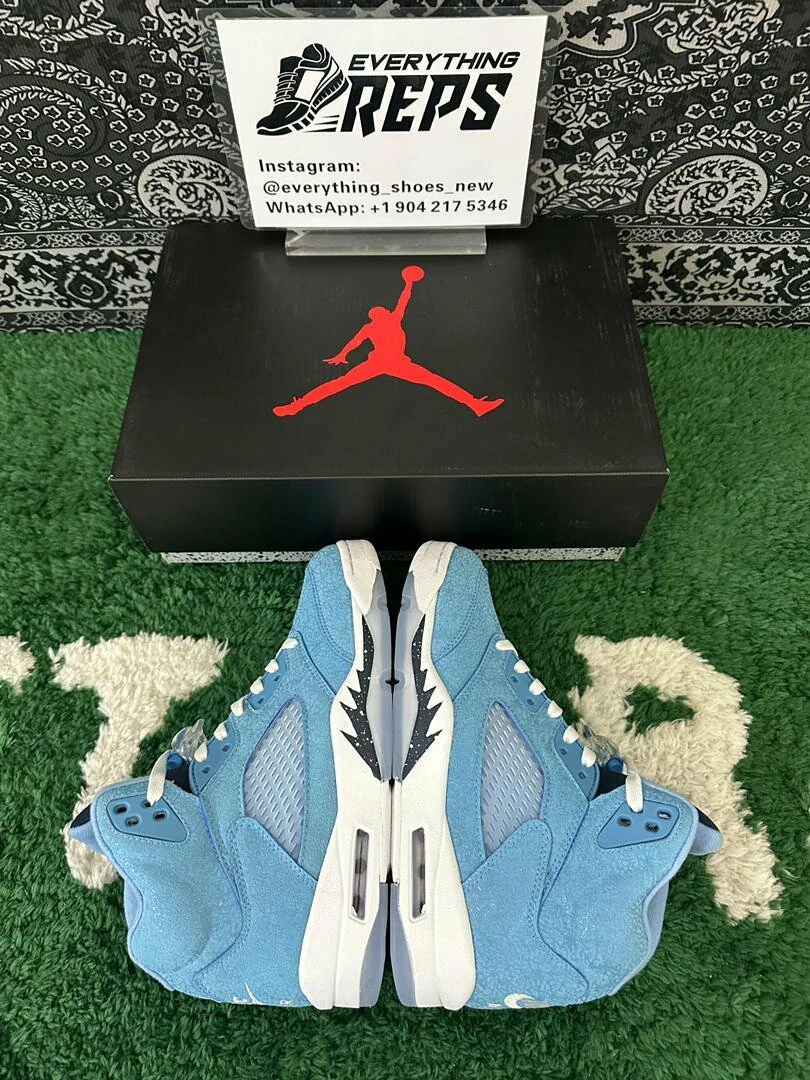
A white, grey, and blue Air Jordan 1 Low is one of the easier shoes to sell and one of the easier ones to get wrong on a purchase Order. The color blocking reads clean in photos, sits well on an apparel wall, and pulls in both sneaker regulars and walk-in customers who just want something that matches jeans. The catch is that the Jordan 1 Low White Grey Blue description covers more than one release, and confusing them on a reorder is how shops end up with Pairs that sit.
What follows are five Checks worth running Before you sign off on a buy: release identification, materials and build, size run, sourcing and verification, and how you price for turn. Each one has caught out buyers who moved too fast on a good-looking photo.
Confirm the Exact Release Before You Commit
There is no single shoe called the white, grey, and blue AJ1 Low. Jordan Brand has used that palette across several seasonal drops, and the blocking shifts from one to the next: grey quarter panels with a blue Swoosh here, a blue heel counter and grey toe there, white midsoles on most of them. Style codes differ too, which matters as soon as a customer sends you a photo and asks for that exact pair.
Pull the style code from the box label and the size tag inside the tongue, then compare the two. If a supplier can only send a stock photo and not a shot of the actual pair with the label visible, treat that as an open question rather than a green light. Get the style code in writing before any deposit changes hands.
Judge Materials and Build, Not Just the Colorway
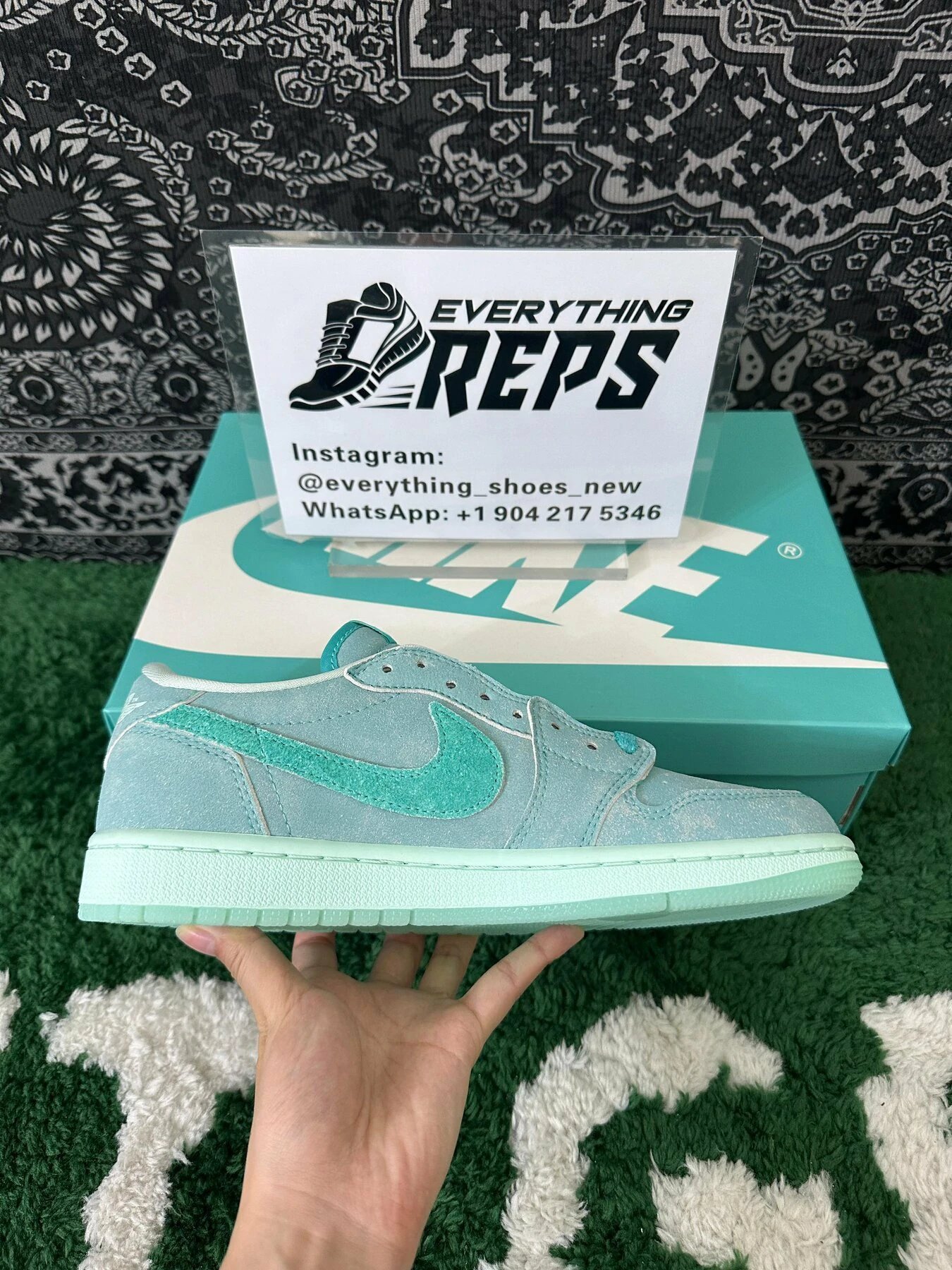
Low-top AJ1s cover a wide range of build quality. Some pairs use softer tumbled leather on the overlays, others a stiffer synthetic with a flat finish. Neither is fake, but they feel different in hand and they age differently. Stiffer panels crease harder at the toe box and scuff sooner, and that is exactly what drives returns when a customer wears a pair twice and changes their mind.
Check the things that show up in complaints: uneven glue along the midsole, paint that already looks thin at the heel, stitching that wanders off the panel edge, a Swoosh that does not sit flush. Under your own store lighting, hold the pair next to a second pair in the same size. Small variation is normal. A mismatched pair is not.
Run this check at the counter or in the stockroom before anything goes on display.
| What to inspect | Passes the sniff test | Red flag |
|---|---|---|
| Style code on box and tongue tag | Numbers match on both, print is crisp | Mismatch, or a label that looks reprinted |
| Upper panels | Flex without a plastic crackle | Stiff, glossy, identical grain on every panel |
| Midsole and outsole paint | Even coverage, clean edge line | Thin spots, overspray, wavy masking |
| Stitching | Consistent spacing, sits on the panel | Loose threads, seams that drift |
| Swoosh placement | Flush edges, even taper, correct angle | Lifted edges, uneven thickness |
Build a Size Run That Fits Real Demand
Most shoppers who ask for a Jordan 1 Low White Grey Blue are buying a casual shoe, not a collectible. That shapes the size run. The middle of the men's run turns fastest, US 8 through 11, with US 9.5 and 10 usually gone first. Women buying into men's sizing push extra demand into the smaller end of that range.
Do not order flat. A workable split for a general-release low-top is roughly two pairs in the core sizes for every one pair at the extremes, adjusted against your own sales history. If your customer base skews young, weight the size run up. If you sell mostly to men over 30, the larger half sizes deserve more depth.
Work through this list before the order goes out:
- Pull the last 90 days of low-top AJ1 sales by size and look at what actually moved.
- Confirm whether the release is men's sizing or a women's-specific pair, then set the conversion note for staff.
- Reserve at least one pair in each of your two fastest sizes as try-on stock.
- Ask the supplier which sizes carry a per-size minimum and how that changes the split.
- Keep 10 to 15 percent of the budget free for a mid-season top-up instead of spending it all at once.
Sizing questions drive a lot of returns on this silhouette. Have an answer ready at the counter and on the product page: most people take their normal Nike size, and wide-footed buyers often go up a half size, though not always. Point customers to the official size chart for the specific release rather than guessing on their behalf.
Source Carefully and Verify What Arrives
Where the pairs come from decides how much of your margin survives the first return. Authorized wholesale accounts, licensed distributors, and established grey-market suppliers all exist, and each comes with its own paperwork, lead times, and price floors. None of them is automatically safe.
Insist that any Jordan 1 Low White Grey Blue shipment arrives with matching box labels, intact tags where the release calls for them, and an invoice that lists style codes and sizes line by line. Photograph the cartons on arrival. If a deal is priced well under everyone else's, ask what is missing, because something usually is.
On imports, duty rates, customs classification, and documentation requirements vary by origin and by the code your goods are filed under. Confirm the details with a licensed customs broker before you book freight, and do not take a supplier's summary of what you will owe as final.
Price for Turn, Not for Hype
General-release AJ1 Lows in this palette are not a hype shoe. They sell at or near retail, move steadily, and rarely spike. That is a fine business to be in, as long as you plan a modest margin and a fast sell-through instead of a big margin and a long wait on the shelf.
Watch your markdown risk. If a colorway has been sitting in other stores for months, discount expectations are already set in the customer's head. Before you finalize a Jordan 1 Low White Grey Blue purchase order, ask for current wholesale price ranges and any volume breaks, then confirm terms in writing. Prices move, so treat any number you hear as indicative until it appears on a purchase order.
Reorder timing matters more than the opening buy on a shoe like this. Set a trigger, for example when you are down to one pair in each of your two best sizes, and place the follow-up while the wall still looks full.
Frequently Asked Questions
Is the Jordan 1 Low White Grey Blue true to size?
Yes, the Jordan 1 Low White Grey Blue runs true to size for most buyers, and the majority of customers take their normal Nike size. Wide-footed buyers often prefer a half size up, and anyone between sizes should try both. Check the current official size chart for the specific release, since lasts can vary slightly between drops.
How many pairs should a small shop order first?
Start with a depth you can turn in 60 to 90 days, concentrated in the core sizes. For most independent shops that means a smaller opening buy with a planned top-up rather than one deep order. Confirm minimum order quantities and any per-size minimums with your supplier, because those terms vary widely between sources.
How can I tell fake pairs from authentic ones?
Compare the style code on the box label with the tag inside the tongue, then look at stitching spacing, Swoosh shape, midsole paint edges, box print quality, and how the leather feels. These checks catch most problems. Close calls should go to a professional authentication service before you list or sell the pair.
Does this colorway hold its resale value?
Not especially. White, grey, and blue general releases are wearable rather than rare, so they trade close to retail and are better treated as steady inventory than as an investment. If your model depends on resale premiums, build it on a different pair.
If you are shaping a low-top assortment for the coming season, send over the sizes and quantities you have in mind and ask for current availability, style codes, and wholesale price ranges. Confirm nothing until you have seen the paperwork and the labels match.